Why optimize for AI: Boost brand visibility in 2026

AI-generated search results now influence over 60% of consumer discovery journeys, yet most brands remain invisible in these critical moments. While traditional SEO helped you rank on page one, AI optimization determines whether your brand gets mentioned at all when prospects ask ChatGPT, Gemini, or Claude for recommendations. The gap between AI-optimized brands and those relying solely on legacy SEO tactics widens daily. This guide reveals exactly how optimizing for AI platforms delivers measurable visibility gains, why generative engine optimization differs fundamentally from traditional search strategies, and which specific content adjustments yield the highest returns in 2026.
Table of Contents
- What Is Generative Engine Optimization And Why It Matters
- How Optimizing For AI Boosts Brand Visibility: Evidence And Strategies
- Navigating AI Search Platforms: Why Data Sources And Indexing Matter
- The Opportunity And Future Of AI Optimization For Brands
- What Is The Difference Between GEO And Traditional SEO?
- How Do I Ensure My Brand Appears In Different AI Search Platforms?
- What Quick Content Updates Can Boost AI Visibility Now?
Key takeaways
| Point | Details |
|---|---|
| Visibility boost potential | AI optimization strategies can improve brand visibility by 30-40% across generative platforms. |
| Strategic content elements | Citing sources adds 40% visibility lift, statistics add 37%, and quotations contribute 30% improvements. |
| Competitive opportunity | Nearly half of all brands lack a dedicated GEO strategy, creating significant early adopter advantages. |
| Platform-specific indexing | Each AI search platform relies on distinct data sources, requiring tailored indexing approaches. |
| Combined strategy power | Implementing multiple optimization tactics together delivers over 5.5% better results than single approaches. |
What is generative engine optimization and why it matters
Generative Engine Optimization (GEO) represents a fundamental shift in how brands approach digital visibility. Unlike traditional SEO, which focuses on ranking within search engine results pages, GEO optimizes content specifically for AI platforms like Google AI Overviews, ChatGPT, Gemini, and Claude. These systems generate original responses by synthesizing information from multiple sources, and brands must adapt their content strategies to appear within these synthesized answers.
The terminology landscape includes related concepts that warrant clarification. Answer Engine Optimization (AEO) focuses on structured data and featured snippets for traditional search engines. Large Language Model Optimization (LLMO) targets specific model architectures. GEO encompasses both while addressing the unique requirements of generative AI systems that create novel content rather than simply retrieving existing pages.
Why does GEO matter more in 2026? AI-powered search experiences now dominate consumer research behaviors. When prospects ask conversational questions, they receive comprehensive answers that mention specific brands, products, and solutions. Traditional page rankings become irrelevant if your brand never appears in the generated response itself. GEO ensures you’re part of the conversation happening inside AI platforms, not just ranked somewhere users might never visit.
Generative engines create what researchers call a three-stakeholder problem. Users seek accurate, helpful information. Content creators want visibility and attribution. AI platforms aim to provide seamless experiences without driving users away. This tension shapes GEO strategies for modern brands trying to balance visibility with user value.
Key GEO objectives include:
- Increasing citation frequency when AI systems reference your domain
- Enhancing content authority signals that models recognize and trust
- Structuring information for easy extraction and synthesis by language models
- Building topical relevance across interconnected subject areas
- Maintaining consistent brand messaging across varied AI-generated contexts
Pro Tip: GEO success requires thinking like an AI system evaluating sources. Prioritize clarity, authority markers, and interconnected context over keyword density or backlink volume alone.
How optimizing for AI boosts brand visibility: Evidence and strategies
Empirical testing across 10,000 queries reveals which content modifications deliver the strongest visibility improvements in AI-generated responses. The data demonstrates that strategic optimization isn’t theoretical but produces measurable, substantial gains for brands willing to adapt their content approaches.

Research testing various GEO tactics shows that citing authoritative sources adds 40% visibility, making it the single most impactful modification. Adding relevant statistics increases visibility by 37%, while incorporating expert quotations contributes a 30% lift. These aren’t marginal improvements but transformative changes in how often AI systems mention and recommend brands.
| Strategy | Visibility Increase | Implementation Complexity |
|---|---|---|
| Citing sources | 40% | Low |
| Adding statistics | 37% | Medium |
| Including quotations | 30% | Medium |
| Fluent language | 6% | Low |
| Combined approach | 45%+ | Medium |
The table illustrates both individual strategy impact and the compounding effect when multiple tactics work together. Brands implementing comprehensive optimization see visibility gains exceeding any single approach by over 5.5%, demonstrating the value of integrated strategies rather than isolated tweaks.
Proven content tactics for AI search optimization in 2026 include:
- Embedding citations to authoritative sources within explanatory paragraphs
- Integrating current statistics with clear context about their relevance
- Adding direct quotations from recognized experts or industry leaders
- Structuring content with clear hierarchies that AI systems parse easily
- Using natural, conversational language that mirrors how users ask questions
These modifications work because they align with how language models evaluate source quality and relevance. AI systems prioritize content demonstrating expertise through evidence, not just claims. When your content includes verifiable data points, authoritative citations, and expert perspectives, models recognize it as higher-quality source material worthy of inclusion in generated responses.
The visibility improvements translate directly to business outcomes. Brands appearing consistently in AI-generated answers capture consideration during critical research phases. Those absent from these responses lose opportunities regardless of traditional search rankings. The gap between optimized and non-optimized brands grows as AI adoption accelerates across consumer and B2B buying journeys.
Pro Tip: Combine multiple strategies within single content pieces rather than applying different tactics across separate pages. A single well-optimized article with citations, statistics, and quotations outperforms three articles each using only one approach.
Navigating AI search platforms: Why data sources and indexing matter
Understanding platform-specific data sources separates effective AI optimization from wasted effort. Each major AI search platform relies on distinct primary data sources, and brands not indexed on these sources simply won’t appear in generated results regardless of content quality.
Google AI Overviews primarily draws from Google’s search index, making traditional indexing and crawlability essential. ChatGPT uses a combination of web crawling data, licensed content partnerships, and user-submitted information. Gemini leverages Google’s knowledge graph alongside real-time search data. Claude relies on training data plus web search capabilities for current information. Perplexity aggregates from multiple search APIs and direct source indexing.
This fragmentation creates complexity but also opportunity. Brands ensuring presence across multiple indexing sources maximize visibility across platforms rather than optimizing for just one system. The effort requires platform-specific strategies rather than assuming universal approaches work everywhere.
Major AI platforms and their primary data sources:
- Google AI Overviews: Google Search index and Knowledge Graph
- ChatGPT: Web crawl data, licensed partnerships, Bing search integration
- Gemini: Google Search, Knowledge Graph, real-time data feeds
- Claude: Training corpus plus web search for current information
- Perplexity: Multi-source aggregation from search APIs and direct indexing
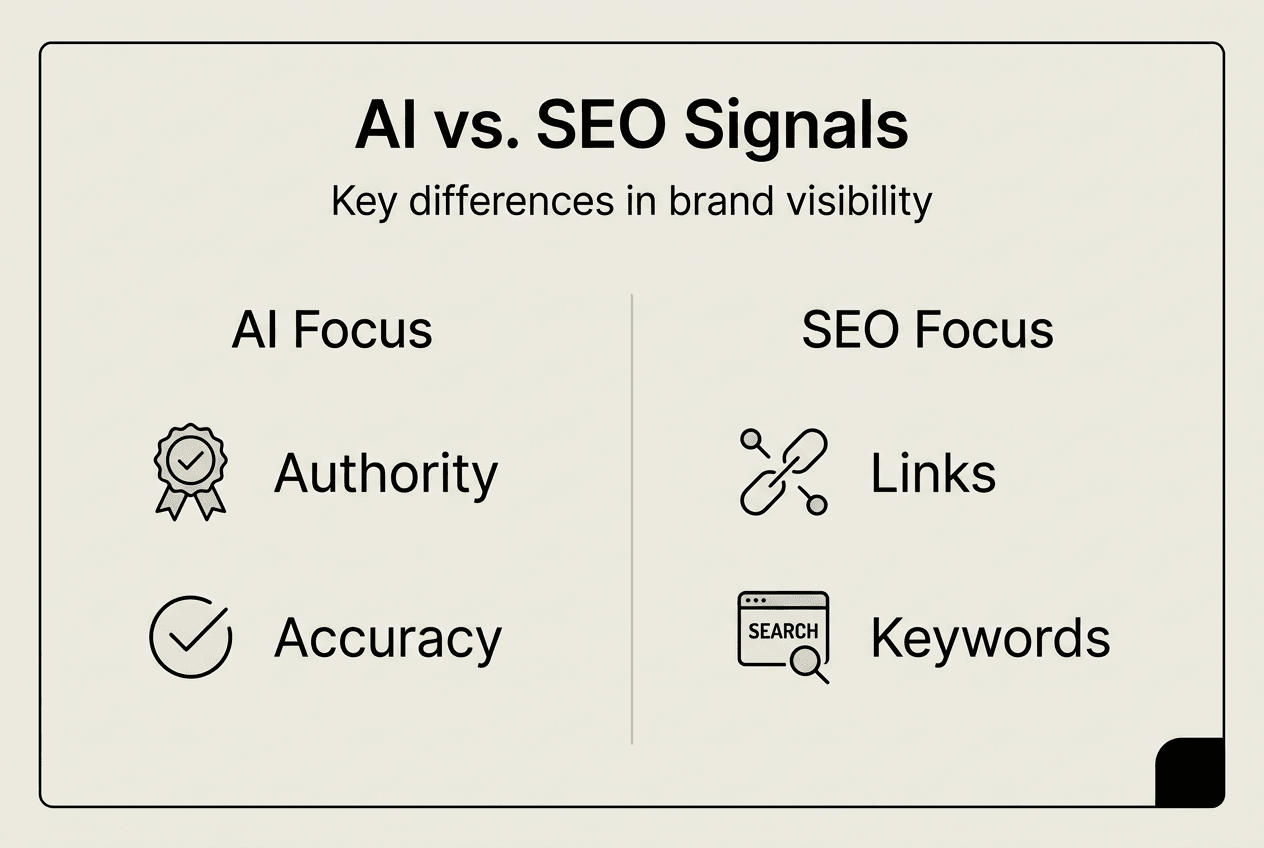
The relationship between AI search and traditional SEO quality signals shows both continuity and divergence. Domain authority, content freshness, and topical relevance matter for both. However, AI systems weight these factors differently and add new considerations like citation patterns, statistical density, and quotation attribution that traditional algorithms largely ignore.
Content quality signals AI platforms prioritize include source authority markers, factual accuracy indicators, comprehensive topic coverage, clear information structure, and evidence of expertise. These overlap with E-E-A-T principles (Experience, Expertise, Authoritativeness, Trustworthiness) but manifest differently in how models extract and synthesize information versus how search engines rank pages.
Regular indexing audits prevent invisible brand syndrome, where your content exists but AI systems can’t access it. Check whether your domain appears in platform-specific searches, verify robots.txt isn’t blocking AI crawlers, ensure XML sitemaps facilitate discovery, and monitor whether content updates propagate to AI systems. AI search brand visibility requires ongoing monitoring, not one-time optimization.
Pro Tip: Create a quarterly indexing audit checklist covering all major AI platforms. Discovering indexing gaps early prevents months of optimization effort going to waste on content AI systems never see.
The opportunity and future of AI optimization for brands
The current AI optimization landscape presents a rare window for competitive advantage. Research indicates that 47% of brands lack a GEO strategy, meaning nearly half your competitors remain unprepared for the AI-driven visibility shift reshaping digital marketing. Early adopters gain disproportionate benefits as they establish authority signals before markets saturate.
Brands implementing GEO strategies now enjoy several first-mover advantages. They capture visibility in AI responses while competitors remain absent. They build citation patterns that reinforce future mentions. They gather data about which content types and topics generate AI inclusion. They establish relationships with platforms as preferred sources. These advantages compound over time, making early action significantly more valuable than delayed response.
The future trajectory of generative engine optimization points toward increasing sophistication and integration:
- Multimodal optimization spanning text, images, video, and audio content
- Real-time personalization where AI responses adapt to individual user contexts
- Deeper platform integration as AI becomes embedded across digital experiences
- Automated optimization tools that continuously adapt content for maximum visibility
- Regulatory frameworks governing AI attribution and source transparency
These trends suggest that boosting AI brand presence will evolve from optional tactic to essential capability. Brands treating GEO as experimental rather than strategic risk falling behind competitors who recognize AI visibility as fundamental to digital marketing success in 2026 and beyond.
The brands winning in AI-generated search aren’t necessarily those with the biggest SEO budgets or highest domain authority. They’re the ones who understood earliest that AI systems evaluate and cite sources differently, then adapted their content strategies accordingly.
Thinking beyond current SEO paradigms requires recognizing that AI optimization isn’t about gaming algorithms but about creating genuinely useful, well-sourced content that AI systems confidently cite. The brands succeeding long-term will be those providing real value that both humans and AI recognize as authoritative, not those seeking shortcuts or manipulative tactics.
The imperative for marketing professionals centers on action over analysis paralysis. Start with high-value content pieces, implement proven GEO strategies, measure visibility changes, and iterate based on results. The opportunity exists now precisely because most competitors haven’t moved yet. That window narrows as awareness spreads and adoption accelerates throughout 2026.
Enhance your AI optimization with RankPirate tools
Translating AI optimization insights into execution requires the right tools and resources. RankPirate simplifies implementing GEO strategies through data-driven frameworks designed specifically for brand visibility in AI-generated responses.
Our free AI visibility checker reveals how AI systems currently respond to queries about your brand. Understanding those response patterns helps you optimize content for the questions prospects actually ask, not just keywords you think matter. RankPirate then tracks discovery, comparison, and validation stages across buying journeys for ongoing visibility optimization.
Detailed guides and checklists walk through implementing strategies proven to deliver 35%+ visibility boosts. The boost AI brand presence guide and AI search optimization checklist translate research findings into actionable steps your team can execute immediately without specialized technical knowledge.
Pro Tip: Start with the optimization checklist to identify quick wins requiring minimal resources, then layer in more sophisticated strategies as you measure initial results and build internal momentum.
RankPirate’s GVS™ (AI Visibility Score) provides the measurement foundation for data-driven optimization. Rather than guessing whether changes improve visibility, you track concrete metrics showing how consistently your brand appears across AI platforms and buying journey stages. This eliminates the manual testing burden while delivering reliable, scalable insights that guide strategic decisions.
What is the difference between GEO and traditional SEO?
How does GEO differ from traditional SEO approaches?
GEO focuses on optimizing content to be cited and recommended within AI-generated answers, while traditional SEO aims to rank pages within search engine results. The fundamental difference lies in whether your goal is appearing in a synthesized response or ranking as a clickable result. GEO emphasizes adding citations, statistics, and quotations to influence how AI systems extract and present your information.
Do traditional SEO signals still matter for AI visibility?
Traditional SEO signals like domain authority and content quality still matter but are weighted differently by AI engines. AI systems prioritize citation-worthy content with clear expertise markers over pure keyword optimization. Both approaches value authoritative, well-structured content, but GEO adds specific requirements around source attribution and statistical evidence that traditional SEO often overlooks.
Can I optimize for both SEO and GEO simultaneously?
Yes, many GEO optimization strategies enhance traditional SEO performance as well. Adding citations, statistics, and expert quotations improves content quality signals that both search engines and AI systems value. The key is balancing user experience with technical optimization requirements across both channels.
How do I ensure my brand appears in different AI search platforms?
What determines whether my brand appears in AI responses?
Understanding each AI platform’s primary data sources and ensuring your content gets indexed there determines visibility. Google AI Overviews requires Google Search indexing, while ChatGPT relies on web crawl data and partnerships. Platform-specific optimization ensures you’re not invisible simply because AI systems can’t access your content.
How often should I check my indexing status?
Monitor indexing status quarterly at minimum, with monthly checks for high-priority content. AI platforms update their data sources at varying frequencies, and indexing issues can emerge unexpectedly. Regular audits catch problems before they cost months of lost visibility.
Should I create different content for each AI platform?
While core content can remain consistent, consider customized optimization per platform preferences. Some AI systems prioritize statistical evidence while others weight expert quotations more heavily. Measuring AI visibility across platforms reveals which content types perform best where, enabling targeted refinements.
What quick content updates can boost AI visibility now?
Which content modifications deliver the fastest visibility gains?
Adding clear citations to authoritative sources provides the single fastest visibility boost at 40% improvement. This modification requires minimal effort but dramatically increases how often AI systems cite your content. Integrate citations naturally within explanatory paragraphs rather than clustering them at the end.
How many statistics should I include in content?
Include 3-5 relevant statistics per 1000 words, ensuring each adds genuine insight rather than filler. Quality matters more than quantity, as AI systems recognize when statistics provide real evidence versus superficial decoration. Recent data from 2025-2026 carries more weight than outdated figures.
Do expert quotations need to come from famous people?
Expert quotations don’t require celebrity but should come from credible authorities in your field. Industry practitioners, researchers, and recognized specialists all work effectively. The key is clear attribution showing why the quoted person has relevant expertise. Use the AI search optimization checklist to identify optimization opportunities across your existing content library.