AI answer ranking explained: key factors for marketers

Digital marketers face a puzzling reality in 2026: traditional SEO tactics don’t guarantee visibility in AI-generated answers. While keywords and backlinks still matter for search engines, AI models like ChatGPT, Gemini, and Claude use entirely different criteria to rank and display content. Understanding these ranking factors is no longer optional for brands seeking consistent visibility across AI platforms. This article breaks down the core elements that determine AI answer rankings, compares them with conventional SEO approaches, and provides actionable frameworks to optimize your content for AI-driven search environments.
Table of Contents
- How AI Ranks Answers: Core Factors Explained
- Comparing AI Answer Ranking With Traditional SEO Approaches
- Proven Frameworks And Strategies To Improve AI Answer Rankings
- Applying AI Answer Ranking Insights To Your Marketing Strategy
- Enhance Your AI Answer Rankings With RankPirate
- Frequently Asked Questions
Key takeaways
| Point | Details |
|---|---|
| AI ranking prioritizes intent and facts | Matching user intent, factual reliability, differentiation, evidence, and formatting drive repeatable ranking gains. |
| Traditional SEO differs significantly | AI models emphasize content quality and structure over keywords and backlinks. |
| Structured frameworks deliver results | Consistent content approaches produce measurable improvements in AI visibility. |
| Formatting aids AI comprehension | Clear headings, lists, and concise paragraphs help AI extract and rank content effectively. |
How AI ranks answers: core factors explained
AI models evaluate content through a fundamentally different lens than traditional search algorithms. Repeatable, reliable gains in AI rankings come from matching user intent, factual accuracy, differentiation, use of evidence, and clear formatting. These five pillars form the foundation of AI answer optimization.
Matching user intent means addressing the precise question or need behind a query. AI systems analyze semantic meaning rather than keyword density, so your content must directly answer what users actually want to know. A query about “reducing customer churn” requires specific retention strategies, not generic definitions of churn rates.
Factual correctness separates trusted sources from unreliable ones. AI models cross-reference claims against established knowledge bases and prioritize content with verifiable accuracy. Presenting statistics without sources or making unsubstantiated claims damages your ranking potential across all AI platforms.
Differentiation determines whether your content stands out in a crowded field. AI systems recognize and reward unique perspectives, fresh data, or novel frameworks that competitors haven’t covered. Simply rephrasing existing content from top-ranking pages won’t earn visibility in AI answers.
Supporting evidence strengthens every claim you make. Citations, data points, expert quotes, and case studies signal credibility to AI models. The AI answer optimization for marketers guide demonstrates how evidence-backed content consistently outperforms unsupported assertions.
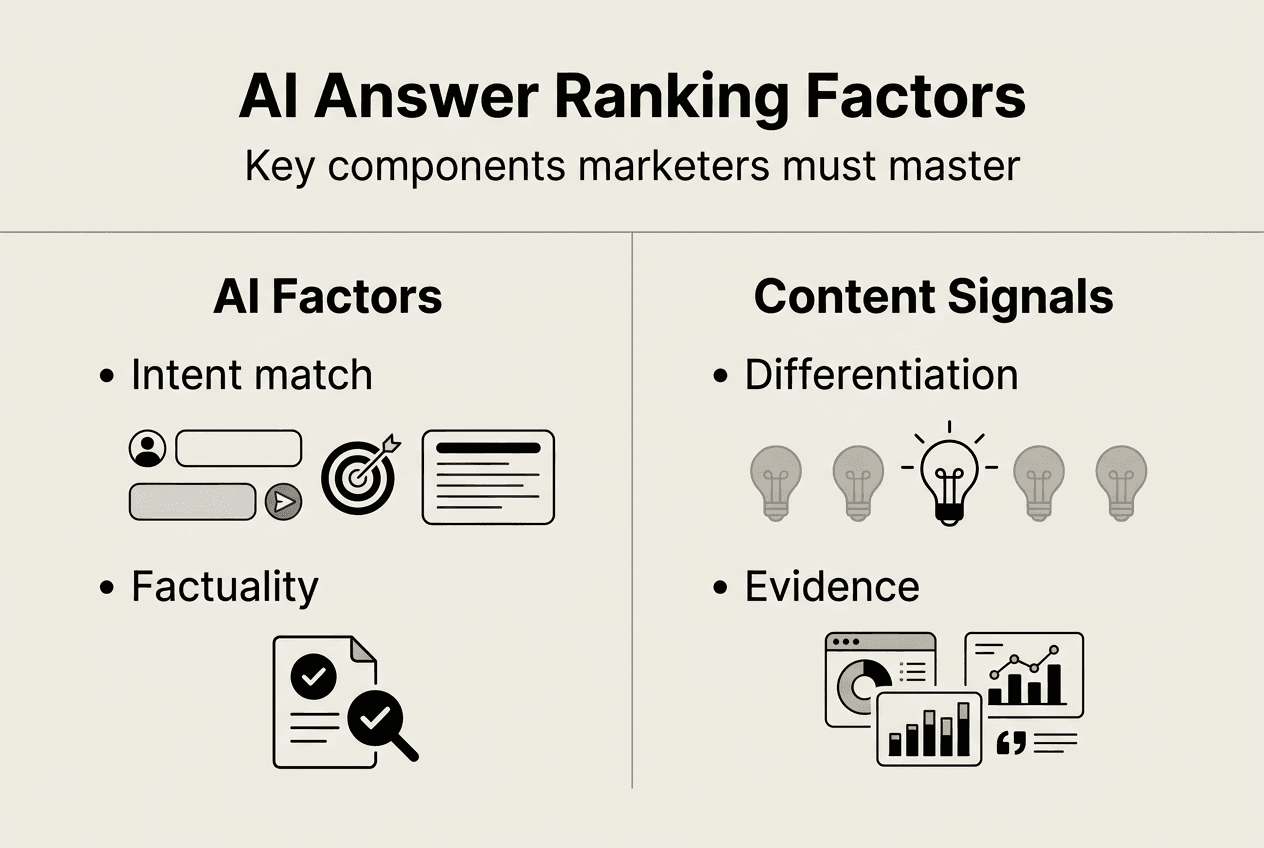
Formatting for machine readability ensures AI can parse and extract your content efficiently. Clear section headings, bulleted lists, concise paragraphs, and structured data all improve how AI models process your information.
Pro Tip: Test your content by asking whether it directly answers the user’s question in the first paragraph. If readers need to scroll or piece together information, AI models will likely skip your content for clearer alternatives.
“Content that combines precise intent matching with factual accuracy and unique differentiation consistently ranks higher in AI-generated answers than keyword-optimized pages lacking these elements.”
Comparing AI answer ranking with traditional SEO approaches
Traditional SEO and AI answer ranking share some common ground but diverge in critical ways. Understanding these differences helps you allocate resources effectively across both channels.

Traditional search engines heavily weight keyword placement, backlink profiles, domain authority, and technical site factors. You optimize title tags, build links, and target specific search terms to climb rankings. These tactics work because search engines use link graphs and keyword signals to determine relevance and authority.
AI rankings emphasize user intent and factuality over keywords. While traditional SEO might reward a page targeting “best CRM software 2026” with exact-match optimization, AI models care whether your content genuinely helps someone choose the right CRM for their specific needs. Keyword stuffing actively harms AI rankings.
Differentiation and evidence carry more weight in AI environments than in traditional search. Two pages with identical backlink profiles might rank differently in Google based on technical factors, but AI models will favor the one offering unique insights backed by credible sources. The AI content optimization guide shows how evidence-rich content outperforms generic advice.
Formatting impacts both channels but for different reasons. Traditional SEO values formatting for user experience and crawlability. AI ranking depends on formatting for content extraction and comprehension. Structured content helps both, but AI models penalize walls of text more severely than search engines do.
| Factor | Traditional SEO | AI Answer Ranking |
| — | — |
| Primary signal | Keywords, backlinks | User intent, factuality |
| Content quality | Important but secondary | Critical ranking factor |
| Differentiation | Nice to have | Essential for visibility |
| Evidence/sources | Helpful for authority | Required for credibility |
| Formatting | UX and crawlability | Machine comprehension |
Using a consistent content structure combining user intent match, factual accuracy, differentiation, evidence and formatting produces reliable AI ranking gains. The AI search optimization checklist provides a framework that addresses both traditional and AI ranking factors simultaneously.
You don’t need to choose between optimizing for search engines or AI models. The most effective approach integrates both strategies, emphasizing the overlapping factors like quality content, clear structure, and genuine user value while addressing the unique requirements of each channel.
Proven frameworks and strategies to improve AI answer rankings
Implementing evidence-based frameworks transforms AI answer optimization from guesswork into a systematic process. Repeatable ranking improvements come from structured frameworks matching user intent with factual, differentiated content and clear formatting.
Start with a content optimization checklist that addresses all five core ranking factors:
- Map user intent precisely by analyzing the actual questions your audience asks across different buying journey stages.
- Verify factual accuracy by cross-referencing claims against authoritative sources and including citations.
- Identify differentiation opportunities by reviewing competitor content and finding gaps or fresh angles.
- Gather supporting evidence including statistics, case studies, expert quotes, and research findings.
- Structure content for AI extraction using clear headings, short paragraphs, and bulleted lists.
Match user questions and intent early in your content. The first 100 words should directly address the core query without preamble or background information. AI models prioritize content that immediately delivers value, so front-load your most relevant insights.
Include credible evidence and sources throughout your content. Every factual claim, statistic, or expert opinion needs backing. The AI prompt analysis guide demonstrates how evidence density correlates with higher AI rankings across multiple platforms.
Differentiate content by addressing unique angles competitors miss. Instead of repeating the same five tips everyone covers, dig deeper into one overlooked aspect or present a contrarian perspective backed by data. AI models recognize and reward genuine originality.
Format content with headings, lists, and concise paragraphs optimized for AI extraction. Aim for paragraphs under 75 words, use descriptive subheadings every 200 words, and break complex information into bulleted or numbered lists. The AI search optimization checklist provides specific formatting guidelines.
Pro Tip: Create content templates that embed these five factors into your workflow. A standardized template ensures every piece you publish meets AI ranking requirements without requiring manual checks.
| Optimization Stage | Key Actions | Expected Outcome |
| — | — |
| Intent mapping | Analyze user queries, identify core needs | Content directly answers target questions |
| Fact verification | Cross-reference claims, add citations | Improved credibility and trust signals |
| Differentiation | Research competitor gaps, develop unique angles | Content stands out in AI comparisons |
| Evidence gathering | Collect data, quotes, case studies | Stronger authority and ranking potential |
| Formatting | Apply structure, use lists and headings | Better AI extraction and comprehension |
Applying AI answer ranking insights to your marketing strategy
Translating AI ranking principles into daily marketing operations requires systematic integration across content development, team training, and performance measurement.
Integrate AI ranking factors into your content development workflows by building them into briefs, templates, and review processes. Every content brief should specify the user intent being addressed, required evidence types, differentiation angle, and formatting requirements. This ensures consistency across all content creators.
Use content frameworks to ensure consistency and repeatability. Structured, factual, differentiated content guided by user intent is the key to reliable AI rank improvements. Document your frameworks so team members can replicate successful approaches across different topics and formats.
Train teams on crafting factual, user-intent focused answers rather than keyword-optimized content. This mindset shift requires explaining how AI models evaluate content differently than search engines. Share examples of high-ranking AI answers and analyze what makes them effective.
Measure performance shifts in AI answer rankings over time using consistent testing methodologies. Manual spot-checks provide incomplete pictures. Automated tracking across multiple prompts, AI platforms, and buying journey stages reveals true visibility trends. Understanding why AI search matters for brand visibility in 2026 helps justify measurement investments.
Continuously iterate based on data and AI search behavior. AI models evolve rapidly, so content that ranks well today might lose visibility as algorithms change. Regular audits identify declining performance and optimization opportunities.
Pro Tip: Establish a monthly AI visibility review process where you analyze ranking changes, identify pattern shifts, and adjust content strategies accordingly. Reactive optimization after visibility drops costs more than proactive monitoring.
The boost AI brand presence guide provides detailed implementation roadmaps for integrating these practices into existing marketing operations without disrupting current workflows.
Successful AI answer optimization isn’t about perfecting individual pieces of content. It’s about building systems and processes that consistently produce content meeting AI ranking requirements across your entire content library. This systematic approach compounds over time as more of your content achieves visibility in AI-generated answers.
Enhance your AI answer rankings with RankPirate
Optimizing for AI answer rankings requires more than understanding principles. You need tools that automate testing, track performance across platforms, and provide actionable insights for improvement.
RankPirate helps brands monitor and improve visibility within AI-generated answers through automated prompt testing across ChatGPT, Gemini, and Claude. Instead of manual spreadsheet tracking, you get comprehensive visibility scores reflecting stable, long-term presence in AI responses.
Try our free AI visibility checker to see how AI answers mention your brand today. Use the AI search optimization checklist to audit existing content against proven ranking factors. Follow the boost AI brand presence guide for step-by-step implementation strategies tailored to 2026’s AI search landscape.
Frequently asked questions
What is AI answer ranking?
AI answer ranking is how AI systems prioritize and order answers in search results based on relevance, factuality, and user intent. It differs from traditional ranking by emphasizing content quality and structure for AI comprehension rather than keywords and backlinks. AI models evaluate semantic meaning and evidence to determine which content best serves user needs.
How important is factual accuracy for AI answer ranking?
Factual accuracy is critical because AI prioritizes trustworthy, reliable content when ranking answers. Inaccurate content can lead to lower rankings or complete exclusion from AI-generated answers. AI models cross-reference claims against established knowledge bases, so unsupported assertions damage your visibility across all platforms.
Can marketers optimize content specifically for AI rankings?
Yes, marketers can optimize content by aligning with AI ranking factors: user intent, factuality, differentiation, evidence, and formatting. Using structured frameworks and tools accelerates ranking improvements by ensuring content meets all core requirements. The key is building systematic processes rather than optimizing individual pieces in isolation.
How often should AI answer rankings be analyzed and adjusted?
Regular analysis is vital due to AI algorithm updates and evolving user behavior. Monthly or quarterly reviews of AI answer rankings help maintain and improve visibility by identifying declining performance and new optimization opportunities. Automated tracking provides more reliable insights than sporadic manual checks, enabling proactive adjustments before significant visibility losses occur.